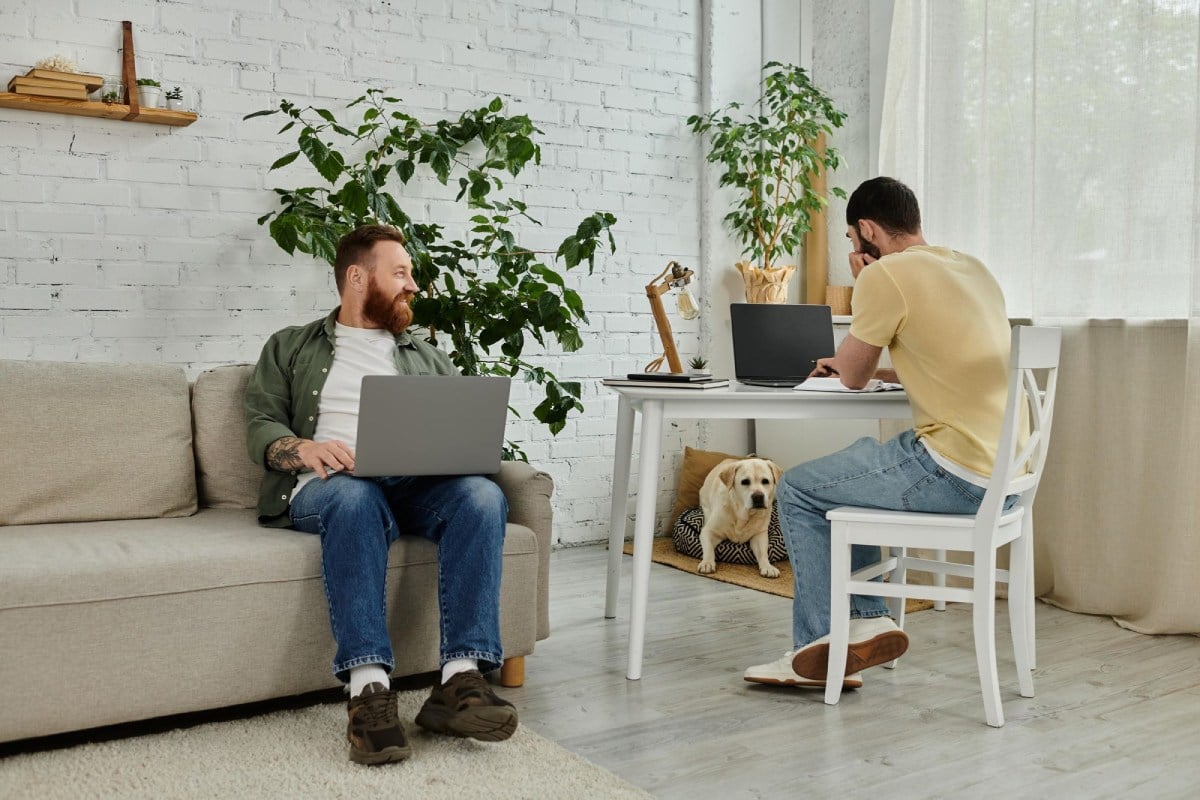
The traditional office, with its rows of cubicles and assigned desks, is rapidly becoming a relic of the past. The COVID-19 pandemic forced a global experiment in remote work, and many employees discovered they not only adapted well but thrived. As companies move forward, a hybrid work model – a blend of remote and in-office work – is becoming the new standard. This shift necessitates a whole new approach to office design: enter hybrid-friendly offices.
Why Hybrid-Friendly Design Matters
The rise of the hybrid work model presents a unique set of challenges for companies. On the one hand, they need to provide the infrastructure and environment to support a remote workforce. On the other hand, the office still needs to serve a purpose, attracting employees and fostering collaboration and company culture. Hybrid-friendly design addresses both these needs, creating a workspace that caters to a flexible work style while fostering a sense of community and purpose.
-min.jpg)
The Pain Points of Traditional Offices
Pre-pandemic offices were often built around the assumption that all employees were present full-time. This led to several problems in a hybrid environment:
- Underutilized Space: Offices with assigned desks often end up with empty workstations, representing wasted real estate and a drain on overhead costs.
- Lack of Flexibility: Traditional office layouts can be rigid and don’t cater to the different work styles and needs that arise in a hybrid model.
- Disparity Between Remote and In-Office Employees: A poorly designed hybrid office can create a sense of disconnect between remote and in-office workers.
Designing for Flexibility and Connection
Hybrid-friendly design offers a solution to these pain points by prioritizing flexibility and fostering a sense of connection. Key features include:
- Multi-functional Spaces: Utilizing hot desking, modular meeting rooms, and breakout areas.
- Technology Integration: Seamless video conferencing and collaboration tools.
- Emphasis on Well-being: Incorporating elements that promote relaxation and focus.
- Community Building: Designing spaces for informal interaction and social connection.
The Stats Don’t Lie: The Benefits of Hybrid Work
Studies show the positive impact of hybrid work models. Stanford University found increased productivity and job satisfaction among employees in a hybrid model, while Owl Labs found that 70% of knowledge workers prefer it.
Conclusion
The hybrid work model is here to stay, and with it comes the need for a new approach to office design. Hybrid-friendly offices can help companies attract and retain top talent, foster a thriving company culture, and ultimately drive business success. By embracing this new design paradigm, businesses can ensure their offices remain a valuable asset in the ever-evolving world of work.